

DRD Through the Lifespan: A Panel Discussion
On January 11th 2026, three incredible parents spent an hour discussing their experience with DYNC1H1-Related Disorders as their children and they have aged. A huge thank you to Pam, John, and Jannine for sharing their experiences and donating their time to do so. Below is a summary of the discussion.
Is there anything we missed? What topics would you like to see in a future panel discussion? Put it in the comments!
Key takeaways
Progression and regression vary significantly among individuals with DYNC1H1-related disorders (DRD)
Motor skills typically have slow improvement throughout childhood, with slow regression in teenage to adulthood.
Behavioral issues will often become less significant with age.
Cognitive issues typically remain consistent through the lifespan, with intellectual disability being common in about 75% of patients.
Seizures affect approximately 40% of DRD patients, with varying severity and impact on daily life. Sometime seizures may not present until adulthood.
GI symptoms are common, including slow gut motility, feeding difficulties, and toileting challenges including late and inconsistent bladder control.
Transitioning to adulthood requires early planning, community building, and consideration of day programs
Family dynamics, especially sibling relationships, are significantly impacted but can foster compassion and resilience
Physical caregiving demands increase as both patients and caregivers age, so make sure to take care of yourself
The DYNC1H1 Association provides valuable community support, research opportunities, and resources
There were 6 topic questions answered by the panelists.
Progression and regression of symptoms
The panel discussed how symptoms progress or regress over time in individuals with DYNC1H1-related disorders.
Details
John: Reported that his daughter Nichole's (52) motor symptoms stabilized after childhood, while cognitive issues remained consistent at a 3-4 year intellectual level. Behavioral issues persist but are manageable with support. Seizures stabilized around age 15, still occurring 6-8 times weekly. Orthopedic issues were more pronounced in childhood, including severe scoliosis requiring spinal rod placement at age 10.
Jannine: Shared that regressions in her family are often linked to viral infections, seizures, hormonal changes during pregnancy, and periods of emotional stress. She described multiple severe, moderate, and mild regressions that she is knows medicine is helpless against. Both her daughters and she experience them. Hospital visits for these progression events have been "traumatic and ultimately pointless."
Pam: Reported that her daughter Allie (30) has experienced slow but consistent forward improvements. Allie didn't walk until age 6 or become toilet trained until 13. She still has some challenging behaviors but less than when younger. The only regression was two seizures two years ago at around age 28, which are now controlled with medication.
Conclusion
Progression patterns vary significantly between individuals with DYNC1H1-related disorders
Some experience stability in symptoms after childhood while others face regression of skills.
Environmental factors like viral infections and stress may trigger regressions in some patients
2. Preparing for adulthood and transition from school
The panel discussed strategies for preparing children with DYNC1H1-related disorders for adulthood and transitioning from school.

John: For Nichole, whose cognitive level is about 2-3 years old, transition wasn't about independent living but finding a world where she was understood and accepted. She attends a day program for adults with developmental disabilities and goes into the community with a one-on-one provider. Building that community before leaving public school would have made day-to-day adulthood easier.
Pam: Noted that Michigan allows students to remain in school until age 26, which was beneficial. Their school had a transition specialist who helped with practical matters like getting an ID at 18 and applying for Social Security. Allie now attends a day program and has direct-hire people who take her into the community, and the relationships Pam built in Ally’s school years is still valuable to her now.
Jannine: Focuses on stress mitigation, emotional regulation, and respecting her children's bodily experiences and self-limits. For her eldest daughter Bethany, who's an artist, she hopes to develop an online hobby business to provide purpose and community. Both daughters are homeschooled due to infection control concerns. Jannine was able to attend university and was a registered nurse until the physical demands became overwhelming, and she wishes that she had chosen a less physically demanding field that would have allowed her greater respite for her physical needs.
Conclusion
Early transition planning is essential, ideally starting in early high school (around age 15)
Building community connections before leaving school helps with the transition out of school, as well as provides long-term community.
Day programs and community access providers are valuable resources for adults with DRD, but they can be difficult to organize.
Creative solutions like online businesses may work for those with infection vulnerability or mobility concerns.
3. Epilepsy and seizures
The panel discussed how seizures have impacted their families and management strategies.
Details
Pam: Allie experienced her first seizures at age 28, which occurred during sleep. This has impacted Pam's sleep as she's always listening for seizures. Allie has been seizure-free for two years and her medication was recently reduced by half.
John: Nichole's seizures started at age 12-13, typically involving loss of consciousness and lasting 1-5 minutes followed by extreme tiredness (post-ictal period). Triggers include anxiety, disappointment, and changes in routine. Medication changes were scary as they could trigger increased behaviors, so Nichole has been on the same medications for about 15 years.
Jannine: Believes her daughter Bethany experienced infantile spasms and apnea from birth, with absence seizures starting at 18 months. One significant seizure caused facial asymmetry that took years to normalize. Bethany also has an SCN2A gene variant that may contribute to her seizures. Neither Jannine nor her other daughter Verity experience seizures.
Conclusion
Approximately 40% of DRD patients experience seizures at some point.
Seizures create uncertainty, anxiety, and sleep disruptions for families.
Medication management can be challenging due to potential side effects.
4. Gastrointestinal symptoms and toileting
The panel discussed challenges with eating, diet management, and toileting.
Pam: Allie had failure to thrive and severe reflux as a baby. She has experienced choking incidents, so the family keeps a Life-Vac de-choking device in the home. Toilet training was challenging due to mobility issues, but Allie eventually became toilet trained at age 13 and remains so at age 30.
Jannine: Both daughters have avoidant restrictive food intake disorder (ARFID) with food aversions to textures, smells, and colors. Jannine herself has gastroparesis (slow-moving stomach muscles) and dysphagia (difficulty swallowing). The family experiences autonomic nervous system issues affecting bowel and bladder function, with chronic constipation in both daughters since 12 months of age, as well as complications with bladder control.
John: Nichole has slow gut motility issues. Greasy or high-fiber foods can cause diarrhea. Diet management has been experimental to find what works best. Nichole uses the toilet independently but wears protection, as she doesn't always make it in time.
Conclusion
GI issues are common in DRD patients, including feeding difficulties and slow gut motility that can cause constipation.
Toilet training may be delayed but is often achievable with persistence, effort, and a bit of luck.
Food sensitivities and restrictive eating patterns are common.
Creating a neutral emotional environment around food can be helpful, a calorie is a calorie.
5. Sibling and familial relationships
The panel discussed how having a family member with DRD affects relationships with siblings and other family members.

Ally as Maid of Honor at her sister Maddy’s wedding
Details
John: Nichole's siblings (brother and sister) sometimes felt overlooked or ignored due to the attention paid to Nichole. They also felt they had extra responsibilities, and finding the appropriate balance as a parent was difficult. Some of Nichole’s behavior embarrassed her siblings, and her disabilities affected their lives. However, this seems to have given them perspective and resilience that became a "quiet strength."
Pam: Used a "divide and conquer" approach as parents to create as normal a childhood as possible for their neurotypical daughter Maddie. Noted that Maddie and her friends included Allie in their play, and they have a strong relationship even as adults. Maddie used Allie as a "measuring stick" for boyfriends, evaluating how they treated her sister. Ally was the Maid of Honor at her sister’s wedding.
Jannine: Described her family as a "tight little unit" where all three face daily challenges, and working together to face them. She tries to provide the same love and security for both children, noting they're good at supporting each other, especially when she is having a particularly challenging day due to her symptoms.
Conclusion
Siblings may feel overlooked or burdened with extra responsibility.
The experience of having a disabled sibling can foster compassion, flexibility, and resilience in siblings
Creating inclusive family & friend dynamics helps build strong relationships, so long as boundaries are also present.
6. Physical disability and caregiving demands
The panel discussed how physical caregiving demands have changed over time and lessons learned.
Details
Pam: At 63, she finds caring for Allie still requires significant physical effort. She's committed to staying as young as possible to care for her daughter longer. She emphasized not letting experts define what a child can achieve, noting that Allie walked by age 6 despite insurance denying physical therapy.
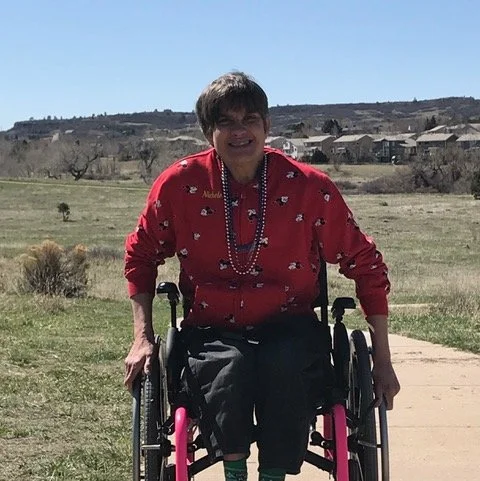
Jannine: Her physical disability has worsened since age 15, especially over the past 15 years since her first pregnancy. She relies on a wheelchair in the community and has home modifications. She regrets not making the caring role 50-50 with her daughters' father, which ultimately led to divorce and significant strain on her body.
John: At 76, he finds picking up Nicole much more difficult than before. As a single parent, he's had to be the caregiver, planner, advocate, and steady presence. He had to "let go of the life I thought I would have and make room for the life I was actually living."
Conclusion
Physical caregiving becomes more challenging as both caregivers and patients age
Self-care for caregivers is essential but often neglected, including exercising
Sharing caregiving responsibilities is important for relationship sustainability
Accepting and adapting to life's unexpected path is a key part of the journey to joy
7. Impact of the DYNC1H1 Association
The panel discussed how the DYNC1H1 Association has affected their lives and the value of participating in research.
Details
Jannine: After 28 years without answers, getting a diagnosis was a "pinnacle moment." The DA has provided a sense of community, access to research, education, patient registry, and connections between patients, carers, and researchers. She expressed gratitude to Lisa, Liz, and Brettne for their efforts and is encouraged by ongoing research.
Lisa: Shared that the DA has raised about $140,000 of their $300,000 goal for their first major drug repurposing project. She emphasized that every dollar goes directly to research with minimal overhead costs.
Conclusion
The DYNC1H1 Association provides valuable community support and resources
Research participation is crucial for advancing understanding and potential treatments, giving a diagnosis meaning.
Fundraising is essential to continue research efforts toward potential treatments
How can you help? Action items
All participants and attendees
Consider ways to help fundraise for the DYNC1H1 Association's $300,000 goal (hosting events, bake sales, social media sharing)
Check with employers about matching donations
Look for grants within communities to apply for
Follow the DYNC1H1 Association on social media platforms
Share personal stories via video, photos, or text for the website
Visit our Volunteer page for more information on how to get involved!
Parents of teens or older individuals with DRD
Consider participating in future panel discussions by contacting the DYNC1H1 Association via email: contact@dync1h1.org

Double-click to edit...