Welcome to our Spring 2026 Interns!
We are thrilled to introduce our Spring 2026 Interns at the DYNC1H1 Association! This semester, we are welcoming two exceptional trainees whose unique backgrounds reflect the multidisciplinary approach needed to support families navigating rare diseases like DYNC1H1-related disorders.
One intern joins us through our Science Communication Internship Program, and the other through a special partnership with the Orphan Disease Center’s Genetic Counselor Student Exchange Program. Together, they represent the powerful intersection of advocacy, clinical care, and cutting-edge science. The DA is excited to expand our partnership with the Orphan Disease Center through this program.
Welcoming Caroline: Genetic Counseling & Family Support
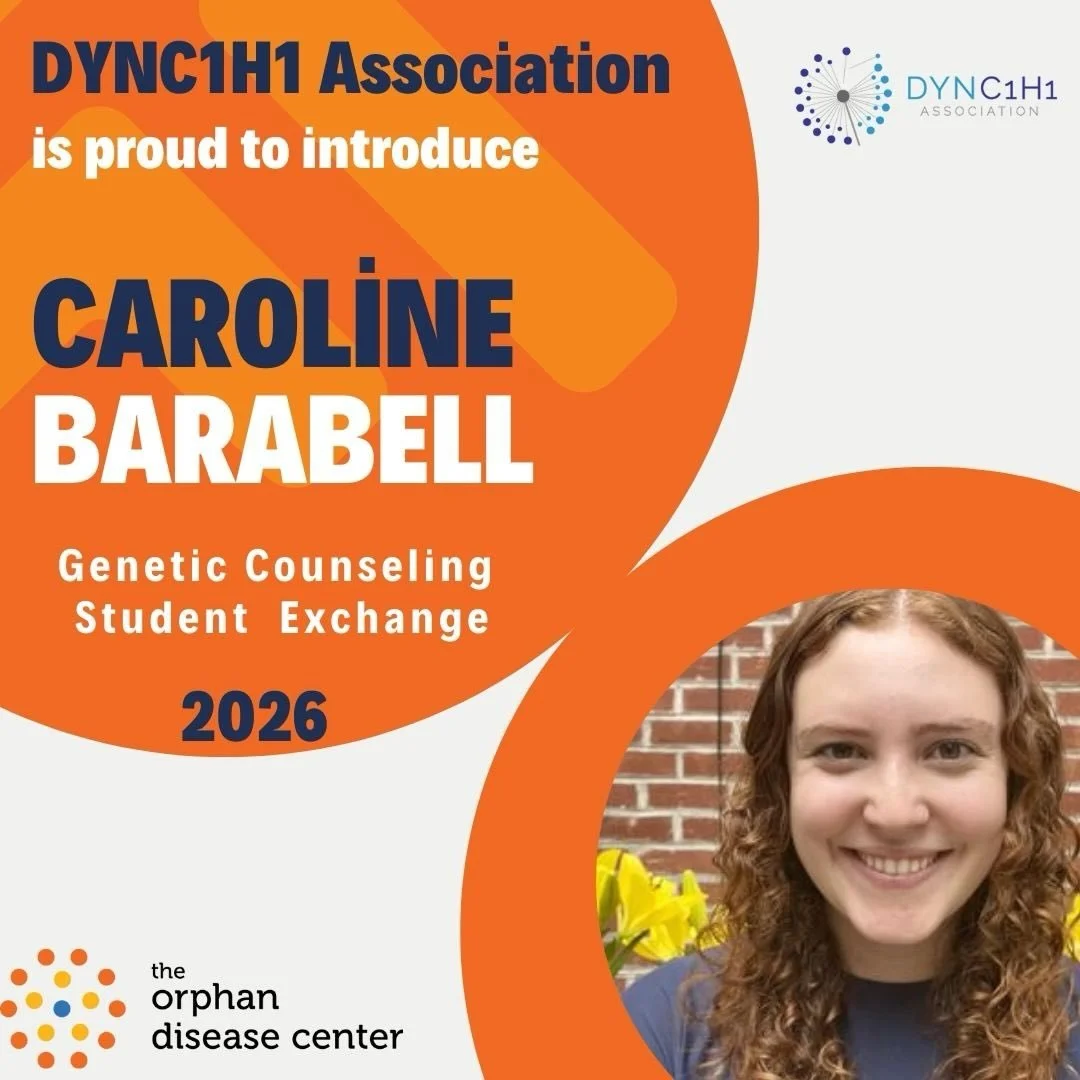
Image: The DYNC1H1 Association in partnership with the Orphan Disease Center is proud to introduce Caroline Barabell, 2026 Genetic Counseling Student Exchange intern.
We are excited to welcome Caroline Barobell, a first-year student in the University of Pennsylvania Master's in Genetic Counseling Program. Through the Orphan Disease Center’s Genetic Counselor Student Exchange Program, genetic counseling students are placed with rare disease organizations to gain firsthand experience in patient advocacy, education, and community engagement. The program helps bridge clinical training with real-world community needs—ensuring future genetic counselors understand not just the science of rare disease, but the lived experience of the families they serve.
Caroline graduated from the University of Michigan in 2023 with a degree in Molecular, Cellular, and Developmental Biology. After graduation, she worked as a clinical research coordinator at the Dana-Farber Cancer Institute, supporting patients with ovarian and endometrial cancer enrolled in Phase I/II therapeutic clinical trials.
She brings with her a deep appreciation for both research and patient-centered care. During her time with the DYNC1H1 Association, Caroline will:
Develop resources for newly diagnosed patients and families
Help clarify what a DYNC1H1 diagnosis means in practical terms
Increase awareness and understanding of DYNC1H1-related disorders
We are especially excited about her focus on supporting families at the moment of diagnosis—when clear, compassionate information can make all the difference.
Welcoming Maya: Translating Complex Science for Families
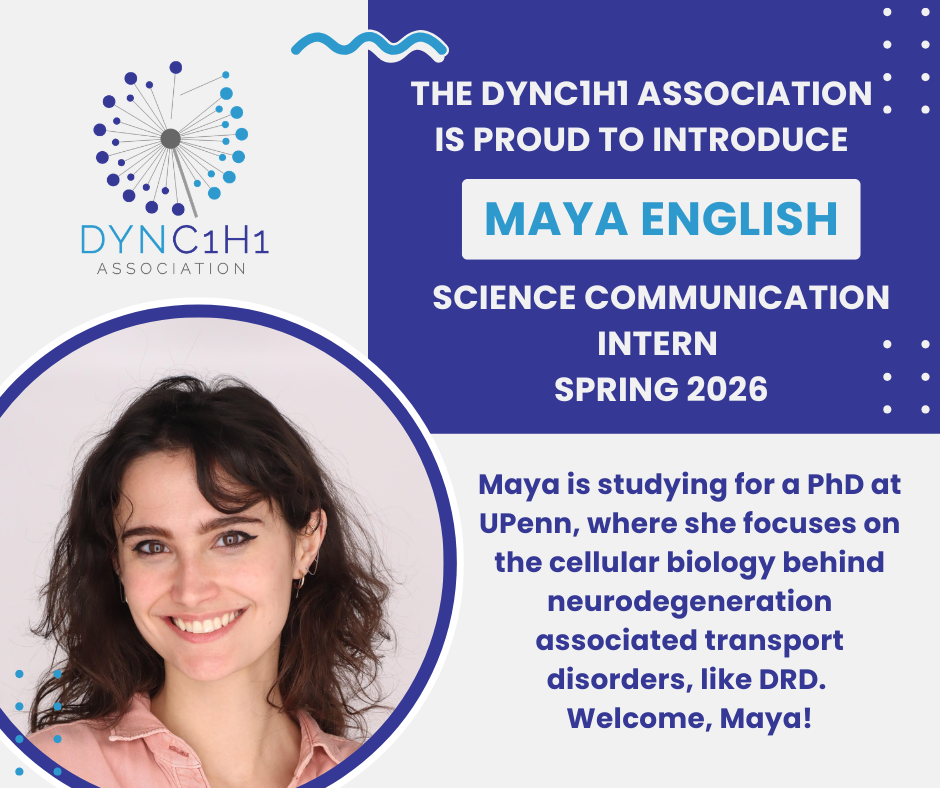
Image description: The DYNC1H1 Association is proud to introduce Maya English, Science Communication Spring 2026. Maya is studying for a PhD at UPenn, where she focuses on the cellular biology behind neurodegeneration associated transport disorders, like DRD. Welcome, Maya!
Maya English joins us directly through our Science Communication Internship Program, and we are delighted to expand this pathway for emerging scientists who want to make a difference in rare disease advocacy. (We are currently recruiting Summer and Fall interns—email contact@dync1h1.org to receive an application!)
Maya studied Biology at Carnegie Mellon University in Pittsburgh. After earning her bachelor’s degree, she moved to the National Institutes of Health, where she completed two years of full-time research focused on the ubiquitin proteasome system. She is now back in Pennsylvania pursuing her PhD at the University of Pennsylvania, studying mechanisms of neuronal health and neurodegeneration in the lab of a member of our Scientific Advisory Board.
Her work with the DYNC1H1 Association will focus on something families consistently tell us they need: clear explanations of the complex science that the DA is undertaking on its path to treatments.
Maya will be creating educational videos and materials that:
Break down how motor proteins work
Explain modern cell biology research in accessible language - especially the research being funded by the DA.
Connect laboratory discoveries to potential treatment development
We are excited to share that her first educational video—on induced pluripotent stem cells (iPSCs)—is already available here. This and future materials are designed to empower families with knowledge and help bridge the gap between bench research and bedside impact.
Outside the lab, Maya enjoys baking, exploring Philly’s art scene, and watching delightfully bad TV—proof that even neuroscientists need a little balance!
Science, Support, and Community
Rare disease advocacy requires collaboration across disciplines. Genetic counselors, basic scientists, clinicians, families, and patient organizations each play a critical role. By investing in training opportunities like these internships, we are helping cultivate the next generation of professionals who understand both the science and the human experience of DYNC1H1-related disorders.
Please join us in welcoming our Spring 2026 interns. We are so grateful to have their energy, expertise, and compassion supporting our community. Please welcome them in the comments! If you want to go the next step in showing your support, make a donation to the DA today:
Double-click to edit...