Patient/Parent Interview: Ally
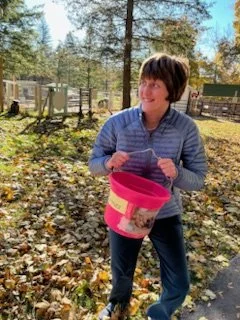
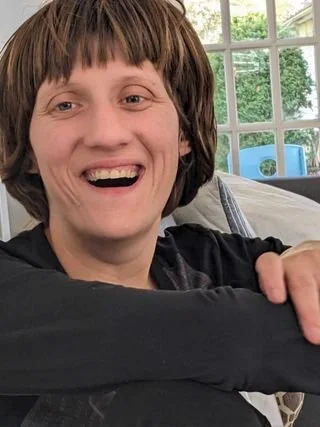
Ally is a 30 year old woman living with a DYNC1H1-related disorder. Her mother, Pam, was interviewed by Caroline Barabell, an intern with the DYNC1H1 Association through the Orphan Disease Center’s Genetic Counseling Student Exchange (GCSX) Program.
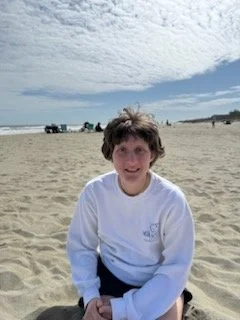
Ally on the beach
Can you share some background about Ally’s journey and how she was diagnosed?
"I had an uneventful normal pregnancy and after her birth, everything was fine. At around six weeks she wasn’t even close to holding her head up. We went to our checkups with the pediatrician, and at 4 months she was a little concerned but wanted to wait and see what happened. Ally had terrible reflux and difficulty gaining weight. At her six-month checkup, our pediatrician referred us to a pediatric neurologist. We saw the neurologist and they did many tests, including muscle biopsy, EMGs, EEGs and brain MRIs but everything came back normal. However, she continued to be very delayed. She didn’t sit until around 18 months. At around age 1 she started to have some significant vision problems. She had lots of speech therapy and physical therapy and started walking at around age 6. When she was around 18, we started talking to genetics again and they suggested whole genome sequencing. That was when we found out she had the DYNC1H1 variant. The neurologist at the clinic told us that we had been doing the right therapies for all these years, which was very reassuring. Over the years her symptoms have been stable, but about two and a half years ago (at age 28) she had a seizure. This threw us for a loop because she had never had any seizures before. She went on seizure medications, and after two years has not had any more seizures, so we were able to reduce her dose."
What have been the most challenging symptoms to manage? If there was a treatment developed, what would you most like to see treated?
"One of the biggest challenges is her being nonverbal. There are times where she has some behaviors, and it’s frustrating because she can’t express why she is feeling that way, and I can’t understand how to help her. It is hard to think that I may not know if she is experiencing something like peripheral pain. I also would want her to have the ability to be more independent. Her weakness is primarily in her arms and her hands not her legs, so fine motors skills are hard for her. When we’re trying to do vocational stuff, she gets frustrated easily. Things like using utensils is challenging for her, she can’t cut steak with a knife or swirl spaghetti around a fork. She also can’t do things like hold a pencil to write her name, but she is great with the iPad. Overall, I would say the cognitive impairment and her fine motor skills are the most challenging."
Can you share more about what Ally is like and her relationship with her family and friends?
"She’s very social, despite being nonverbal, and loves to be around other people. COVID was difficult for her, because she did not want to be at home. She also is like a lot of kids - she likes her routine. She is very close with her immediate family and loves her sister who is three years older. We wanted to make life normal for his sister too, but it was hard sometimes because, for example, if she wanted to go to a sporting event, one of us had to stay home with Ally. All our friends and our family have totally embraced her and when they were growing up people were always very kind. Now, all our friends are empty nesters, and we all get together and play euchre or have dinner parties. Whenever they invite us, they always make sure to invite Ally and include her. We’re very fortunate to have a community like this."
What was the experience like for you receiving a genetic diagnosis after 18 years?
"It was nice to have an answer. I think if I had known previously, I may have had more kids but because she was never diagnosed, I was a little bit fearful. I would have had the ability to have two kids like Ally but emotionally it may have been draining. It really helped my other daughter at the time to know that she could have kids and not be worried. The other part of it, is that Ally has always moved in a positive direction. It’s been slow, but always positive. I know some people with DYNC1H1 can experience some regressive symptoms but from everything I understand about Ally, it seems like she won’t experience this. It has made me feel at ease that her symptoms will likely not dramatically regress at some point, and I hope that stays the case."
Have there been any resources that have been helpful for you?
"Once Ally turned 18, we were able to use Medicaid resources. It’s nice now that we can hire people and can take Ally out and go do normal things like a regular kid, instead of always hanging out with mom and dad. It’s given Ally a chance to be more independent. Having these resources, allows Ally to go out into the community and have friends. Where Ally is from you can go to school until you’re 26. She was in a special education program and she loved school. After she graduated, we have gotten involved in a vocational day program. She goes Monday through Thursday for five hours a day and they’re fabulous. That’s another resource that I can’t imagine not having."
What advice would you give to a parent of a child who has been newly diagnosed with a DYNC1H1-related disorder?
"My first advice would be to try to educate yourself and understand what that means as much as you can. Aside from that specific diagnosis I would just say network like crazy, make friends. I have a group of friends and our daughters were all part of the infant program for special needs kids. These women are still my friends 27 years later. The women that have already gone through it are a wonderful wealth of knowledge and information and I love being able to pay it back and give it to other newer moms."
How have you been involved with the DYNC1H1 association?
"We attended the dynein research conference in Ann Arbor last May. It was great to hear everything that they presented. I was also able to meet a lot of people at that conference, one of them was a professor at the University of Michigan who is doing research on DYNC1H1. We later went to an exhibit about DYNC1H1 at the Natural History Museum there, and I got to see Ally’s picture which was amazing."
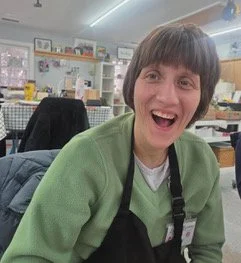
We thank Caroline for conducting the interview, as well as Ally & her mom, Pam, for sharing their experiences. If you are a family interested in sharing your story, we’d love to hear from you! Email us at contact@dync1h1.org.
Want to support finding cures for people like Ally? Donate to the DYNC1H1 Association, the only 501c3 Nonprofit dedicated to accelerating research for treatments in DYNC1H1-related Disorders.